





More Information
Led PCB Driving Data
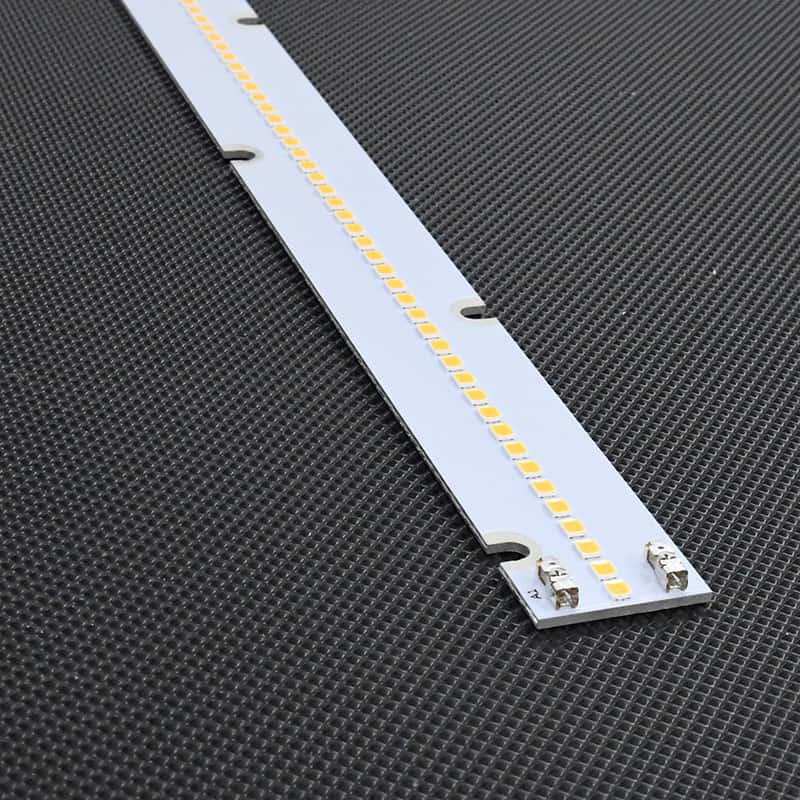
Driving Characteristics. Board is 16S7P
|
Per-string If (A) |
Board Vf (V) |
Per-string Power (W) |
Total If 7P (A) |
Total Power 7P (W) |
Per-string lm |
Total lm 7P |
Efficacy (lm/W) |
|---|---|---|---|---|---|---|---|
|
0.030 |
42.1 |
1.26 |
0.210 |
8.82 |
250 |
1 750 |
198 |
|
0.050 |
42.6 |
2.13 |
0.350 |
14.91 |
416 |
2 912 |
195 |
|
0.070 |
43.1 |
3.02 |
0.490 |
21.14 |
579 |
4 053 |
192 |
|
0.090 |
43.5 |
3.92 |
0.630 |
27.44 |
740 |
5 180 |
189 |
|
0.110 |
44.0 |
4.84 |
0.770 |
33.88 |
898 |
6 286 |
186 |
|
0.130 |
44.4 |
5.78 |
0.910 |
40.46 |
1 054 |
7 378 |
182 |
|
0.150 |
44.8 |
6.73 |
1.050 |
47.11 |
1 207 |
8 449 |
179 |
|
0.170 |
45.2 |
7.69 |
1.190 |
53.83 |
1 358 |
9 506 |
177 |
|
0.190 |
45.6 |
8.67 |
1.330 |
60.69 |
1 506 |
10 542 |
174 |
|
0.210 |
46.0 |
9.66 |
1.470 |
67.62 |
1 652 |
11 564 |
171 |
|
0.230 |
46.4 |
10.70 |
1.610 |
74.90 |
1 796 |
12 572 |
168 |
|
0.250 |
46.7 |
11.70 |
1.750 |
81.90 |
1 937 |
13 559 |
166 |
|
0.270 |
47.0 |
12.70 |
1.890 |
88.90 |
2 076 |
14 532 |
163 |
|
0.290 |
47.4 |
13.70 |
2.030 |
95.90 |
2 213 |
15 491 |
161 |
|
0.310 |
47.7 |
14.80 |
2.170 |
103.60 |
2 348 |
16 436 |
159 |
|
0.330 |
48.0 |
15.90 |
2.310 |
111.30 |
2 480 |
17 360 |
156 |
|
0.350 |
48.4 |
16.90 |
2.450 |
118.30 |
2 610 |
18 270 |
154 |
|
0.370 |
48.7 |
18.00 |
2.590 |
126.00 |
2 739 |
19 173 |
152 |
|
0.390 |
49.0 |
19.10 |
2.730 |
133.70 |
2 865 |
20 055 |
150 |
|
0.410 |
49.3 |
20.20 |
2.870 |
141.40 |
2 990 |
20 930 |
148 |
|
0.430 |
49.6 |
21.30 |
3.010 |
149.10 |
3 112 |
21 784 |
146 |
|
0.450 |
50.0 |
22.50 |
3.150 |
157.50 |
3 233 |
22 631 |
144 |
|
0.470 |
50.3 |
23.70 |
3.290 |
165.90 |
3 351 |
23 457 |
142 |
| Per-string If (A) | Board Vf (V) | Per-string W | Total If 7P (A) | Total W 7P | Per-string PPF (µmol/s) | Total PPF 7P (µmol/s) | System PPF/W (µmol/J) |
|---|---|---|---|---|---|---|---|
| 0.010 | — | — | — | — | — | — | — |
| 0.030 | 42.1 | 1.26 | 0.210 | 8.82 | 3.5 | 24.4 | 2.76 |
| 0.050 | 42.6 | 2.13 | 0.350 | 14.91 | 5.8 | 40.5 | 2.72 |
| 0.070 | 43.1 | 3.02 | 0.490 | 21.14 | 8.1 | 56.4 | 2.67 |
| 0.090 | 43.5 | 3.92 | 0.630 | 27.44 | 10.3 | 72.1 | 2.63 |
| 0.110 | 44.0 | 4.84 | 0.770 | 33.88 | 12.5 | 87.5 | 2.58 |
| 0.130 | 44.4 | 5.78 | 0.910 | 40.46 | 14.7 | 102.9 | 2.54 |
| 0.150 | 44.8 | 6.73 | 1.050 | 47.11 | 16.8 | 117.6 | 2.50 |
| 0.170 | 45.2 | 7.69 | 1.190 | 53.83 | 18.9 | 132.3 | 2.46 |
| 0.190 | 45.6 | 8.67 | 1.330 | 60.69 | 21.0 | 147.0 | 2.42 |
| 0.210 | 46.0 | 9.66 | 1.470 | 67.62 | 23.0 | 161.0 | 2.38 |
| 0.230 | 46.4 | 10.70 | 1.610 | 74.90 | 25.0 | 175.0 | 2.34 |
| 0.250 | 46.7 | 11.70 | 1.750 | 81.90 | 27.0 | 189.0 | 2.31 |
| 0.270 | 47.0 | 12.70 | 1.890 | 88.90 | 28.9 | 202.3 | 2.27 |
| 0.290 | 47.4 | 13.70 | 2.030 | 95.90 | 30.8 | 215.6 | 2.24 |
| 0.310 | 47.7 | 14.80 | 2.170 | 103.60 | 32.7 | 228.9 | 2.21 |
| 0.330 | 48.0 | 15.90 | 2.310 | 111.30 | 34.5 | 241.5 | 2.18 |
| 0.350 | 48.4 | 16.90 | 2.450 | 118.30 | 36.3 | 254.1 | 2.15 |
| 0.370 | 48.7 | 18.00 | 2.590 | 126.00 | 38.1 | 266.7 | 2.12 |
| 0.390 | 49.0 | 19.10 | 2.730 | 133.70 | 39.9 | 279.3 | 2.09 |
| 0.410 | 49.3 | 20.20 | 2.870 | 141.40 | 41.6 | 291.2 | 2.06 |
| 0.430 | 49.6 | 21.30 | 3.010 | 149.10 | 43.3 | 303.1 | 2.03 |
| 0.450 | 50.0 | 22.50 | 3.150 | 157.50 | 45.0 | 315.0 | 2.00 |
| 0.470 | 50.3 | 23.70 | 3.290 | 165.90 | 46.6 | 326.2 | 1.97 |
Choose your performance setting (pick one)
-
High-efficiency
Per string: 0.25 A → Board: ~46.7 V, 1.75 A total, ~81.9 W, ~13,560 lm (~166 lm/W)
Best for long runtimes, cooler operation, and lowest running cost.
-
Balanced output (recommended everyday setting)
Per string: 0.35 A → Board: ~48.4 V, 2.45 A total, ~118.3 W, ~18,270 lm (~154 lm/W)
Great mix of punchy brightness, efficiency, and manageable heat.
-
Maximum output
Per string: 0.47 A → Board: ~50.3 V, 3.29 A total, ~165.9 W, ~23,460 lm (~142 lm/W)
For maximum light levels when you have ample heatsinking and ventilation.
Important installation notes
-
Even, reliable brightness: With 7 parallel strings, we recommend small per-string ballast resistors (or independent constant-current channels) so no single string hogs current.
-
Thermal management: Figures shown are at Tc = 25 °C. In real use, expect a small drop in lumens and a slight rise in voltage as temperature increases. Use adequate heatsinking to keep Tc within spec.
-
Driver selection: Choose a constant-current driver that delivers the total current shown above at the corresponding voltage (allow margin). If using constant-voltage ~48–50 V, add per-string current regulation.
-
Wiring & protection: At higher settings (≥ 2.5 A total), upsize cabling appropriately and consider per-string fusing for added protection.
What makes Cree 2835 Pro9 in 90 CRI as efficient as a 80 CRI Led?
KSF (Potassium Fluorosilicate) phosphors, specifically in the form of KSF/PFS (Potassium Fluorosilicate:Mn 4+), play a significant role in the world of LED lighting and display technologies. They are particularly known for their narrow-band red emission, making them a vital component for wide color gamut displays and high-CRI lighting applications.
KSF phosphors offer several compelling features and benefits:
- Narrow-Band Red Emission: KSF phosphors emit at a peak wavelength of around 631nm. This specific emission profile is crucial for achieving a wide color gamut in display technologies.
- Advanced Phosphor Technology: Companies like GE have showcased enhancements to this narrow-band red-emitting phosphor technology. GE’s Next Generation PFS/KSF Technologies, for example, highlight advancements that enable next-generation display technologies such as Mini and Micro-LEDs.
- Improved Absorption and Reliability: Current Chemicals’ patented TriGrain® KSF Phosphor, for instance, delivers higher absorption and improved reliability compared with standard KSF phosphors. These phosphors are usable for various applications, including on-chip LED, miniLED, microLED, phosphor coatings, and remote film products.
- Collaboration and Development: GE and Current Lighting Solutions have collaborated to develop advanced versions of KSF Red Narrowband phosphor. This collaboration aims to enable the use of these materials in cutting-edge display technologies, particularly in emissive microLEDs.
- Environmental Impact: The use of KSF phosphors is also a move towards more environmentally conscious manufacturing in the LED industry. As the industry shifts away from lead-based products, the development and implementation of lead-free alternatives like KSF phosphors become increasingly important.
The development and use of KSF phosphors represent a significant leap in LED technology, offering enhanced color quality and environmental benefits. These advancements position KSF phosphors as a crucial component in the future of display technology and energy-efficient lighting solutions


Reviews
There are no reviews yet.